

- We test a wide range of fresh produce. A summary is presented in the table. This shows how many tests we have carried out and information on typical levels of detection.
- What are our most common results? – our most common result is no detection at all.
- The rest of the top 5 most common residue results are all fungicides.
- These are typically used to stop rots, helping to reduce food waste (for example materials used after harvestin citrus to help reduce food waste when storing or shipping).

When growing food, our farmers need to protect their crops against weeds, pests and diseases. This can help to make the best use of key resources and reduce food waste. A range of crop protection approaches and systems (such as physical control methods, pesticides, biological control, crop rotation and healthy soils) can all have a part to play in supporting sustainable and resilient food production and reducing waste. At Sainsbury's we work with our farmers and suppliers to encourage responsible approaches to crop protection and sourcing.
Responsible sourcing
Our Crop Protection requirements for suppliers are set out in our Responsible Sourcing Manual, supporting sustainable and resilient crop production approaches within our fresh and frozen produce supply chains and for our in-store bakeries.
What we require from our suppliers:
Use of Integrated Pest Management (IPM): suppliers must be able to demonstrate an IPM approach to crop protection
Plant Protection Product Use: where plant protection products are used, this should be a well managed and targeted use of crop protection products (such as pesticides) within an IPM based approach
Pesticide Residue reporting: where crop protection products are used, our suppliers must have a transparent and risk assessed approach to pesticide residue testing and reporting
Technical engagement: we expect our suppliers to have an active involvement in Sainsbury's Crop Action Group (and similar activities), so we can learn from each other to help advance best practice, improve risk awareness and support IPM/sustainable crop production

Countries have legal requirements on when crop protection products can be used, and on which crops.
Sometimes crop protection products will leave behind a footprint after use, this is termed a residue. Where crop protection products are used, they must meet legally set maximum residue levels (MRL), this is the highest level of a pesticide footprint (residue) that is legally permitted in the country of sale.
Sainsbury’s suppliers are required to follow all regulatory requirements in the county of use when using a crop protection product and all legal MRL requirements in the country of sale.
We work with our suppliers to support the use of Integrated Pest Management (IPM). IPM is the careful consideration of all available crop protection methods, where farmers and growers will use a range of measures that discourage the development of populations of harmful organisms.
The aim is that crop protection products (such as pesticides) should only be used when needed, and at levels that are economically and ecologically justified, to help to reduce or minimise risks to health and the environment. Practically, at Sainsbury’s, we encourage our growers to minimise the use of pesticides wherever possible, through the use of IPM. For example, the use of crop covers, biological control, or new varieties can all be used as approaches to help address weed, pest, and disease challenges in crop production. Suppliers must be able to demonstrate an IPM based approach to crop protection. This should drive best practice and ensure that, where possible, crop protection product use is minimised. Some countries set IPM requirements in their legislation (where these are in place they must be followed), but Sainsbury’s also provide guidance to support our suppliers with IPM considerations, for example where there are no ‘in country’ requirements in place.
Pesticides should be the last option as an IPM approach, after other forms of control have been considered and used in preference.
IPM approaches help to ensure that crop protection product use is based on the careful, safe, and appropriate use of professionally chosen plant protection products and can help to reduce the need of these products. Sainsbury's supports minimising the use of crop protection products through the use of IPM. However, we also recognise that the use of crop protection materials can still be required, for example, this might be:
- The prevention of rots and diseases either in the field or after harvest, helping us to reduce food waste
- Where other IPM methods have not been successful, or a pernicious/unexpected pest problem has occurred
- To help crops reach their potential to deliver yield, and produce food (otherwise other resources that have been used such as land, fuel and fertilisers might also be ‘wasted’)
- Often crops that have to be stored for longer, or crops we can’t grow in the UK, will need post-harvest treatments to stop rots and reduce food loss
Where plant protection products are used, this should be a well-managed and targeted use of these materials within an IPM based approach. Our suppliers are required to show that all the products they intend to use are approved for use on the relevant crops in the country of use. For some pesticides (active ingredients) where specific risks have been identified, we ask our suppliers for higher levels of scrutiny on their IPM use, encouraging alternatives, and permitting use only where absolutely needed. An example could be where some fungicides or insecticides might be needed in specific cases to help manage resistance risks.
We also have a list of pesticides (active ingredients) that we do not allow to be used in our supply chains, for example, some of the most hazardous materials that have been identified through international conventions (such as Rotterdam and Stockholm conventions).
These lists of pesticides are dynamic and reviewed regularly by industry experts to ensure we stay up to date and continue to support our suppliers around best practice.
Where crop protection products are used, they must meet legally set ‘maximum residue levels’ (MRL). This is the highest level of a pesticide footprint (residue) that is legally permitted. In addition to Sainsbury’s own internal residue testing programme, our suppliers must have a transparent approach to pesticide residue testing and reporting where crop protection products are used. Any testing programme must be based on a risk assessment, for example, considering relevant risk factors for that particular crop and country of production. Tests must be undertaken by an accredited laboratory and shared with Sainsbury’s for review, and if we see an exceedance or even a high level, we will investigate with suppliers to understand why this occurred and to support best practices and learning, working together to keep residue levels as low as we reasonably can.
Summary of supplier residue testing results over the last four years (2021-2025)
| Crop type | Number of tests carried out | No residues detected at all | Detections between 0% and 50% of MRL | Average % of MRL detected |
| All crops | >35,000 | 32% | 66% | 5% |
| Citrus | >4,000 | 14% | 83% | 13% |
| Top fruit | >7,000 | 29% | 67% | 4% |
| Soft fruit | >4,000 | 21% | 77% | 4% |
| Stone fruit | >800 | 5% | 95% | 6% |
| Root crops | >1,400 | 64% | 35% | 3% |
| Salads with baby stem and rocket | >3,000 | 33% | 63% | 3% |
| Tomatoes, peppers, aubergines | >1,500 | 57% | 43% | 2% |
The mean crop protection product residue level detected in a given year. Data presented as a % of the MRL for all supplier residue data collected in that year.
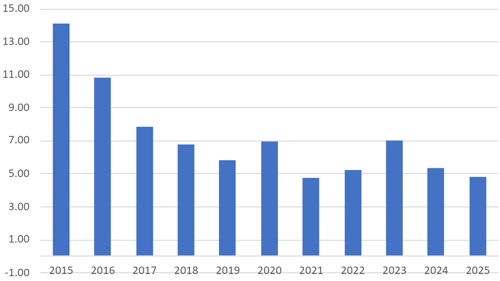
There have been some changes in the way this data is collected and collated over this time period (e.g. thenumber and types of tests and range of crops will vary), however, the data in each column is a commonrepresentation of the mean value for all the MRL data recorded in a given year.
On average we share and review over 6000 residue test results each year with our suppliers. 97% of our resultsare less than 50% of the legally permitted maximum residue level (MRL).
Our way of working involves close collaboration with suppliers, for example using a range of structured groups to support sharedlearning, best practice and sustainable crop production across our supply chains. This includes Crop Action Groups (CAGs), as well as other development and sustainability‑focused forums, where suppliers actively engage around common challenges andpriorities. Through collaborative engagement, suppliers can share insight, horizon scan emerging issues and learn from eachother across crops and regions. By working together in this way, we strengthen risk awareness and support resilient, sustainable,IPM‑based crop production aligned with our Plan for Better commitments.
How we work with our suppliers
Partnerships: Sainsbury’s believes that strong partnerships with suppliers and farmers are important, and can help us to improve best practice and support resilient crop production.
Grower Groups: For many years, Sainsbury’s has worked closely with our suppliers and farmers to share learning, improve bestpractice and support resilient crop production. We collaborate through a range of supplier group formats, including ourlong‑established Crop Action Groups (CAGs), which for over 15 years have provided a global network, bringing together growersacross a wide range of crops. These groups, alongside other similar development forums, provide opportunities for suppliers andgrowers to share insight, discuss common technical challenges and explore new thinking together.
Technical interaction: By working collaboratively, we are able to support best practice and the management of key risks,contributing to our sustainable and resilient food production goals. While we don’t always have all the answers, experience hasshown that working openly with our suppliers and learning together leads to stronger, more resilient outcomes over time.